Overview
Unmanned Aerial Vehicles (UAVs) have become a vital part of industries ranging from defence and public safety to agriculture, media, and infrastructure inspection. As drone technology continues to advance, one key area remains critical to their effectiveness: video encoding.
From early analogue systems to today’s ultra-efficient, low-latency H.265 encoders with AI onboard, video encoding has evolved dramatically. But where is it heading next? And how is Antrica helping shape that future?
Keep reading to find out!
From Analogue Signals to IP Streams
In the early days of UAV development, video feeds were often low resolution, analogue, and intended for basic situational awareness. Encoding, if it happened at all, was rudimentary, with no compression or streaming flexibility.
As UAVs took on more complex roles, encoding had to evolve. Enter Antrica’s Miniature UAV Video Encoders, capable of compressing high-definition video into formats like H.264 and H.265, streaming over IP protocols (RTSP, RTMP, SRT), and delivering footage in near-real time.
Antrica’s ANT-1770S is a perfect example, bringing SDI and CVBS inputs into the IP era with dual-stream H.264/H.265 output and broad protocol support for seamless integration into modern workflows.
The Demand for Real-Time, Low-Latency Transmission
Whether piloting drones beyond visual line of sight (BVLOS), conducting live surveillance, or monitoring critical infrastructure, latency matters.
That’s why the modern UAV Video Encoder must deliver high-quality video with minimal delay. Antrica’s ANT-1776UAV and ANT-1776ZB models meet this demand head-on, delivering latency as low as 100ms, enabling real-time decision-making.
Low latency isn’t just a performance spec, it’s mission-critical.
AI at the Edge: Smarter Drones with Onboard Processing
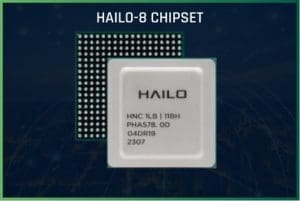
The next evolution is already here: AI-enhanced video encoding.
Encoders like Antrica’s ANT-1776UAV go beyond compression and streaming. With the optional Hailo-8 AI module, it becomes a full-fledged edge AI platform. Think real-time object detection, tracking, and decision-making, all onboard the drone, with no cloud dependency.
This opens the door for:
- Autonomous threat detection
- Smart navigation and obstacle avoidance
- Instant anomaly detection in inspection tasks
The video encoder is no longer just a messenger, it’s becoming a decision-maker.
More Streams, More Control
Operators now expect multi-streaming as standard. Whether it’s streaming to command centres, mobile devices, cloud platforms, or secure archives, the encoder must handle it all, at once.
The ANT-1770H+ supports up to four simultaneous streams, each with independent resolutions and protocols. That means a UAV can achieve things such as broadcast to YouTube (RTMP), record to local storage (HLS), send an encrypted feed to HQ (SRT), and offer a real-time preview to the pilot (UDP), all from one compact device.
This level of flexibility enables full situational awareness across multiple users and platforms.

Precision Payload Compatibility
Modern UAVs are carrying increasingly specialized cameras:
- Zoom Block Cameras (Sony FCB-EV series)
- Thermal Imaging Cameras (FLIR Boson, Lepton)
- Low-light sensors and more
Encoders like the ANT-1776ZB are engineered for these payloads, supporting LVDS, Cameralink, CVBS, and USB 3.0 inputs. As UAV payloads diversify, encoders must remain adaptable, and Antrica is leading the way with modular board-level solutions.
Built for Harsh Conditions
UAVs aren’t flying in labs, they’re deployed in deserts, arctic zones, war zones, and hurricanes. That’s why encoding hardware must be rugged.
Antrica’s Miniature UAV Video Encoders like the ANT-1776UAV and ANT-1776ZB are MIL-STD-810G tested and operate from -40°C to +85°C, making them ideal for mission-critical deployments in any environment.
What’s Next?
Looking ahead, the next stage of UAV video encoding will likely focus on:
- More onboard AI for fully autonomous drones
- Dynamic bitrate adjustment for adaptive networks
- Encrypted multi-path streaming for secure, reliable comms
- Sensor fusion encoding – combining thermal, visual, radar feeds into one smart stream
At Antrica, we’re actively developing solutions in each of these areas, ensuring UAV operators stay ahead of both the technology curve and their mission requirements.
Final Thoughts
As UAV missions grow more complex, video encoders are evolving from passive components to intelligent, mission-enabling tools. Whether you’re building tactical drones for defence or inspection platforms for industry, encoding performance will define what your UAV can do, and how well it can do it.
Antrica is proud to support that evolution with a versatile range of compact, AI-ready video encoders designed for the next generation of UAVs.
Ready to upgrade your drone’s video capabilities? Contact us today to learn which one of Antrica’s market leading video encoders is right for your application!
-
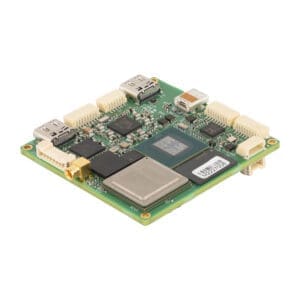
ANT-1776AI Miniature UAV AI Video Encoder
Read more -

ANT-1770S Low Cost Mini SDI Encoder Board
Read more -

ANT-1770H+ Low Cost Mini HDMI Video Encoder
Read more -

ANT-1770H Low Cost Mini HDMI Video Encoder Board
Read more -

ANT-1776UAV H.265 HDMI+CVBS Input Micro Sized Drone Encoder with AI Option
Read more -

ANT-1776ZB H.265 LVDS Sony, Flir & Tenum Zoom Block Encoder
Read more